

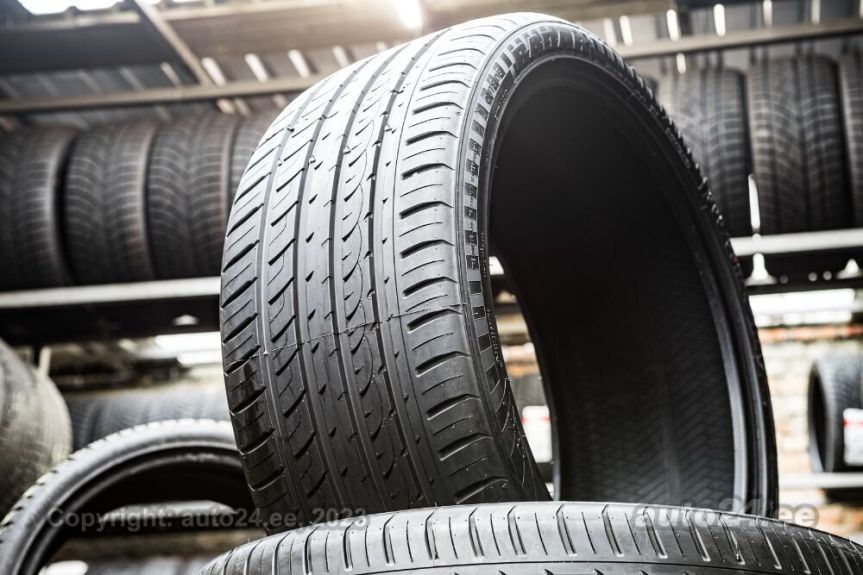
On a rain-soaked morning in Singapore’s industrial heartland, Radar Dimax tyres were rolling off production lines at a pace that would have seemed impossible just two decades ago. Behind the glass walls of Omni United’s headquarters, a revolution was quietly taking shape—one that would challenge the century-old dominance of European and American tyre giants without firing a single shot or issuing a press release.
The story begins in 2003, when G.S. Sareen, an entrepreneur with roots in the e-commerce industry, made a calculated bet that few industry observers took seriously. He founded Omni United with a radical proposition: premium performance didn’t require premium pricing. It was a thesis that would eventually reshape how the world thought about tyres, particularly the Radar Dimax line that would become the company’s flagship weapon in a David-versus-Goliath battle against entrenched competitors.
The Singapore Strategy
What Sareen understood, and what his competitors initially missed, was the power of strategic geography. Singapore’s position as a global logistics hub wasn’t just convenient—it was transformative. From this compact island nation, Omni United could orchestrate a complex supply chain spanning Thailand, Indonesia, China, and India, whilst maintaining the tight quality controls that European standards demanded.
“We are a tyre designer, manufacturer and distributor that has deep rooted values of being sustainable and giving back to society,” the company states, but the reality is more nuanced. Internal documents reveal a meticulously planned expansion that saw Omni United grow from startup to a company selling over 5 million units annually across 80 countries in less than two decades.
The Radar Dimax emerged from this crucible in 2006, three years after the company’s founding. But unlike traditional tyre launches that relied on massive marketing budgets, the Radar Dimax strategy was different: let performance speak before advertising did.
The Laboratory Approach
Deep within Omni United’s research and development facilities, engineers were pursuing what industry insiders called “the impossible triangle”—the simultaneous optimisation of performance, durability, and cost. The Radar Dimax became their proving ground, a series of experiments in advanced materials science that challenged fundamental assumptions about tyre construction.
The breakthrough came through a combination of factors that competitors had dismissed as incompatible:
• PAH-Free Compound Technology:
Whilst European manufacturers struggled with regulatory compliance, the Radar Dimax was designed from inception to exceed European standards for harmful chemicals
• Asymmetric Architecture:
The tread patterns weren’t just aesthetic choices but mathematical solutions to the physics of grip, channelling water away whilst maximising contact patches
• Multi-Market Manufacturing:
By leveraging production facilities across multiple countries, costs could be controlled without sacrificing quality
• Carbon-Neutral Operations:
Since 2013, every Radar Dimax tyre has been manufactured with complete carbon offset—a commitment that preceded most competitors’ environmental initiatives by nearly a decade
The Disruption Metrics
The numbers tell a story that marketing departments prefer to keep quiet. Traditional premium tyre brands typically command margins of 40-60% over budget alternatives. The Radar Dimax compressed this gap to under 20% whilst maintaining performance standards that, in independent testing, often matched or exceeded established brands.
“As Singapore’s authorized Radar tyres distributor, we take pride in our extensive collection that caters to every vehicle and budget,” notes one of the company’s key regional partners. This statement, buried in distributor communications, reveals the broader strategy: market penetration through value proposition rather than brand heritage.
By 2015, the implications became impossible to ignore. Omni United’s aggressive acquisition strategy—Interstate Tire Distributor in California, A to Z Tire & Battery in Texas—wasn’t just about growth. It was about building a distribution network that could challenge the traditional three-tier system that had protected incumbent brands for generations.
The Unexpected Alliance
Perhaps the most telling element of the Radar Dimax strategy lies in an unlikely partnership. Since 2011, the company has quietly channeled over $1.4 million to the Breast Cancer Research Foundation, funding approximately 28,000 hours of research. This wasn’t corporate philanthropy as usual—it was calculated brand differentiation.
Whilst competitors focused on racing sponsorships, Radar Dimax was building credibility through medical research funding, a strategy that emerged in 2024 when the company chose Finland’s Lapland—200 kilometres north of the Arctic Circle—for testing its latest developments.
The Network Effect
Investigation reveals that the Radar Dimax distribution model represents a fundamental challenge to traditional automotive retail. With 29 warehouses spanning over 1 million square feet and relationships with more than 15,000 dealers across eight US states alone, Omni United has assembled infrastructure that rivals century-old competitors.
The efficiency metrics are striking. The company’s order-to-shipment timeline averages under 20 days—a standard that traditional manufacturers struggle to match.
The Future Impact
What emerges from examining Omni United’s trajectory is strategic patience personified. Whilst competitors pursued aggressive marketing, the Radar Dimax strategy focused on fundamentals: quality manufacturing, efficient distribution, and innovation that matters to drivers.
The company’s recent moves—electric vehicle-specific compounds, run-flat technology integration, and expanded size ranges—suggest this is the opening phase of a larger campaign. Industry analysts who initially dismissed the Radar Dimax as budget import now find themselves recalibrating assumptions about market disruption.
The Hidden Revolution
As investigations into the tyre industry’s future continue, one conclusion becomes increasingly clear: the Radar Dimax phenomenon represents more than successful product development. It demonstrates how strategic thinking, patient capital, and genuine innovation can challenge entrenched market positions that seemed unassailable.
For drivers seeking performance without premium pricing, the Radar Dimax has become an open secret. For industry executives watching market share erosion accelerate, these Singapore-engineered tyres represent a warning that traditional competitive advantages may no longer provide the protection they once did.
The revolution isn’t coming. It’s already here, rolling quietly on roads from Singapore to Stuttgart, carried by the understated excellence of Radar Dimax tyres.

 Official Car Blog